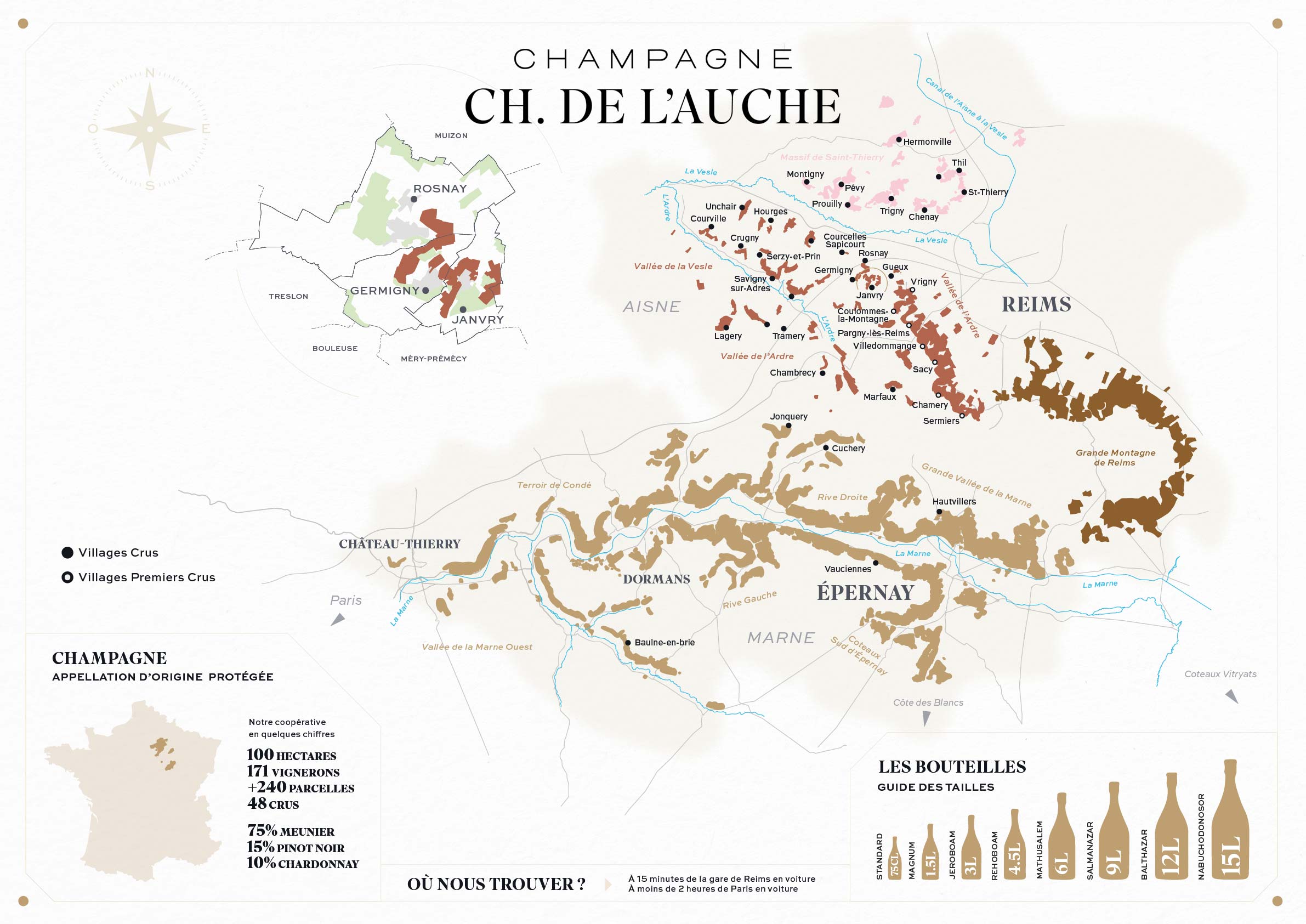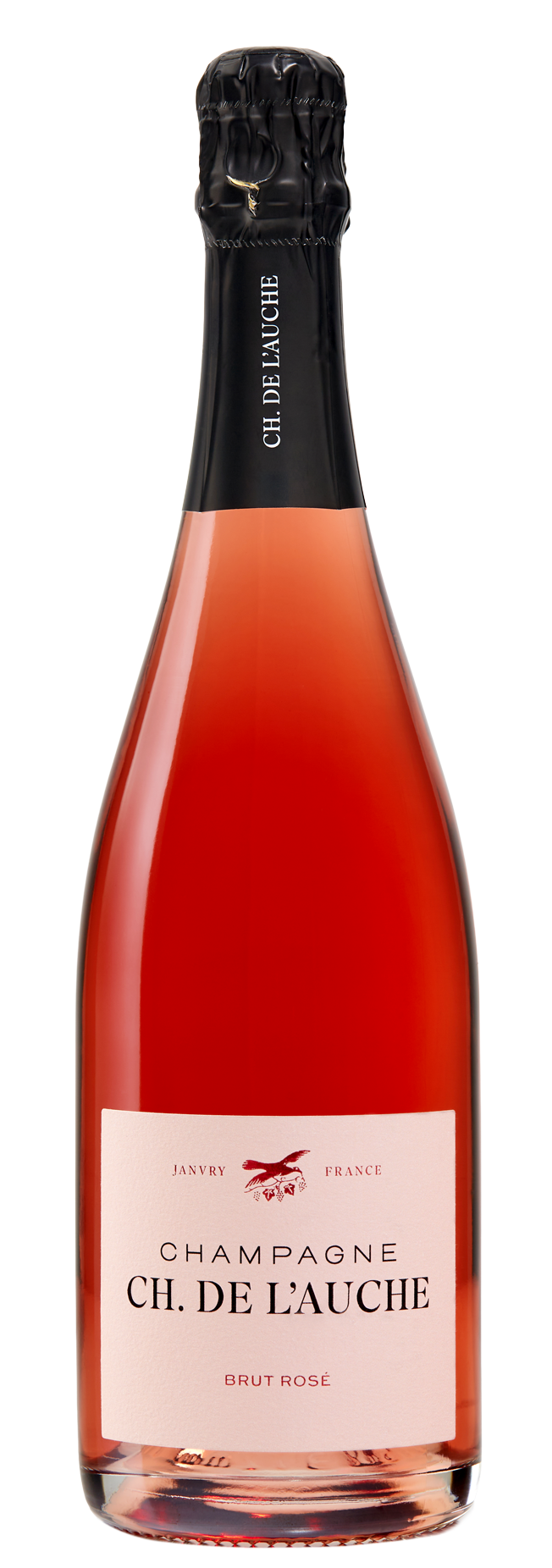
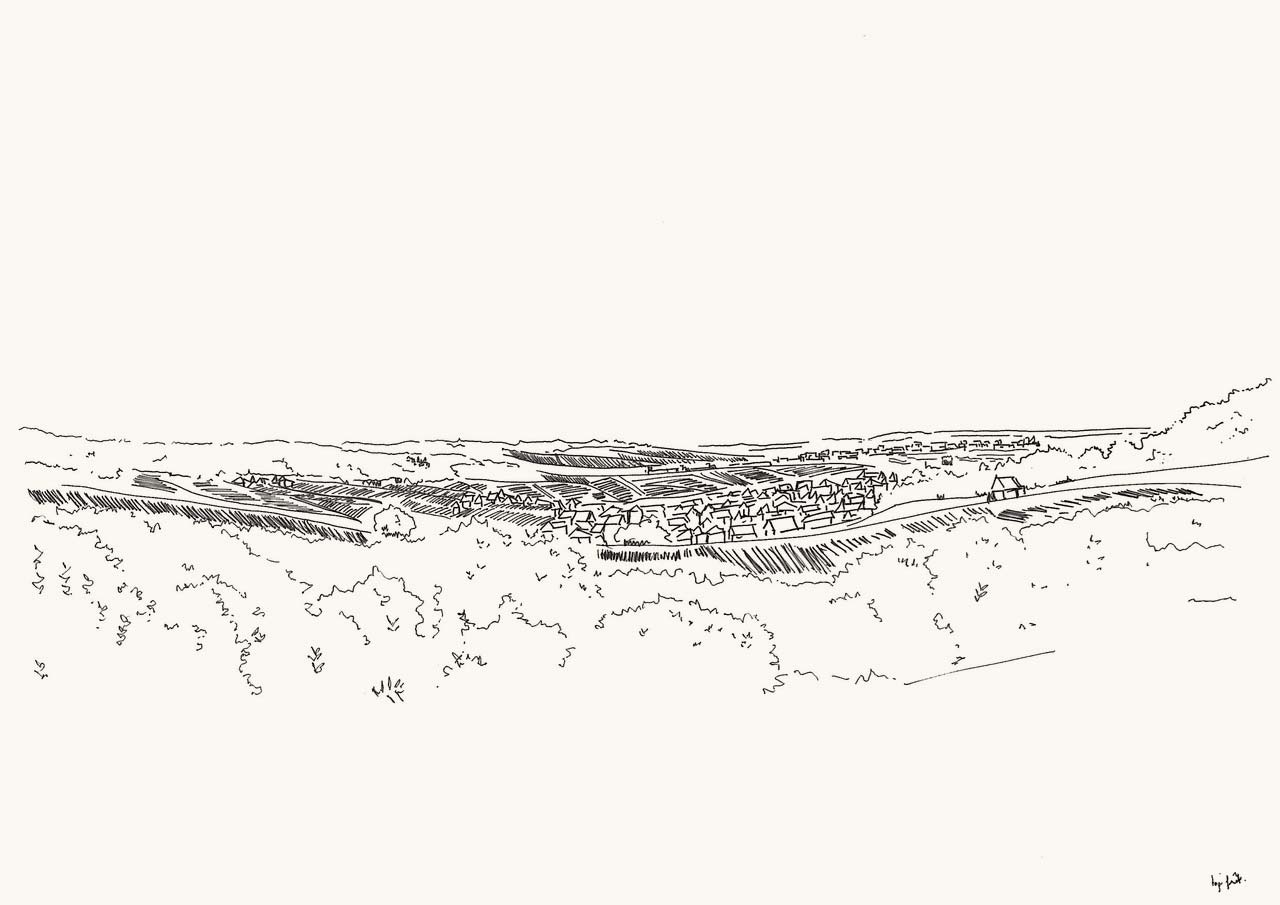
Our house is located in Janvry on the left bank of the Vesle. Janvry is the most representative wine-growing area of this region.
Vines in good surroundings
Thanks to the shape of the Vesle Valley, two microclimatic influences are present. The slopes of the Vesle Valley are organized into small valleys, dotted with pastureland, ponds and pools, while woods and groves punctuate the landscape. These wetlands help protect the upper part of the slope from frost.
"If you walk through these villages, built in contact with the vineyards on the hillside, you will find that they resemble islands in a sea of vines."
G. Orban, Consultant terroir
The partly sandy subsoil gives the vineyard paths a yellowish hue, contrasting sharply with the lighter-colored soils of the eastern part of the Montagne de Reims, which are derived from white chalk.
The vineyards are scattered and are bordered more by crops than by forest.
Our local area
The vine draws its unique character from diverse and complementary soil formations: clay, sand, and limestone. Each type of rock contributes its aromatic and flavor potential to the grape varieties.
Clay soils are richer and more fertile, producing fruity, dense, and sometimes very luscious wines.
Coastal marine sands impart suppleness, fluidity, and a saline quality on the palate, along with a tangy character.
The limestone in this region is precious. It was quarried to build Reims Cathedral. These fossiliferous limestones express their character through wines that are straightforward and elegant on the palate, with a delicate saline potential.